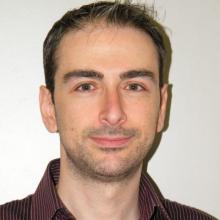
GIUSEPPE DE PIETRO
Research associate

Research Activity
The research group conducts theoretical, experimental, and applied research activities on Artificial Intelligence models and systems capable of reasoning on complex data, adapting to dynamic contexts, interacting with the environment, and conversing with human beings, with a focus on knowledge engineering and interpretability, natural language and multimodality, advanced decision-making and workflow management capabilities, and reduction of environmental impact.
A first research area consists of techniques for knowledge engineering through the integration of heterogeneous and multimodal data, both structured and unstructured. The objective is to build interpretable neurosymbolic knowledge models capable of integrating the efficiency of neural models or evolutionary methods with the transparency and explicit knowledge typical of symbolic systems, to ensure robustness, generalization, and traceability in decision-making processes. Particular attention is placed on approaches capable of evaluating information from heterogeneous and constantly evolving sources, through real-time processing and the identification of trends, correlations, and anomalies in dynamic contexts, even in the presence of noisy, incomplete, or partially labeled data.
A second research area is focused on the definition of small-scale linguistic and multimodal models to combine computational efficiency and semantic capabilities, through lightweight architectures, adaptive and incremental training strategies inspired by human learning, and the integration and alignment of heterogeneous data and signals. Furthermore, this area aims to define dynamic, automatic, and linguistically robust prompt engineering techniques, modular intelligent agent architectures based on linguistic models to autonomously manage reasoning, planning, and workflow management activities, and Retrieval-Augmented Generation approaches to efficiently combine generative capabilities and knowledge access mechanisms.
A final, cross-cutting research area concerns the study and application of strategies to ensure the sustainability of AI models, through high-efficiency algorithms, advanced computational resource management methodologies, and hardware/software co-design solutions. Within this area, the refinement of distillation and compression techniques to reduce architectural complexity while maintaining high performance, neuromorphic models based on Spiking Neural Networks that mimic the functioning of the human brain to optimize energy consumption, and innovative Quantum Machine Learning approaches for solving problems intractable with classical methods, are particularly important.
The proposed solutions are developed on conventional HPC infrastructures and specialized platforms (quantum and neuromorphic), both for high-precision implementations in cloud environments and high-efficiency implementations for edge devices (smartphones, robotic systems).
Goals
The objective of the research group is to create Artificial Intelligence systems capable of analyzing, understanding, and processing heterogeneous data, both structured and unstructured, with particular attention to natural language. Such systems enable advanced processes for the extraction of predictive models, optimization of complex tasks, understanding of gestures and situations, reasoning and decision support, information retrieval, question answering, and autonomous workflow management.
To achieve these goals, concrete challenges are addressed related to the engineering of knowledge, known or hidden in the data, the scalable processing and generation of textual and multimodal data, adherence to the principles of interpretability and transparency, and computational sustainability and energy efficiency. To this end, cutting-edge technologies are integrated, from neurosymbolic models and Generative AI, to quantum computing and neuromorphic networks, up to optimized hybrid computing architectures and high-efficiency algorithms.
Application Fields
There are multiple application fields, including Health, Public Administration, Industry 4.0, Energy, Logistics, and Cultural Heritage.